
AI-Generated Videos Could Rewrite Democracy and Break Public Trust
How Veo 3’s Hyper-Realistic Deepfakes Could Be Fueling Political Chaos

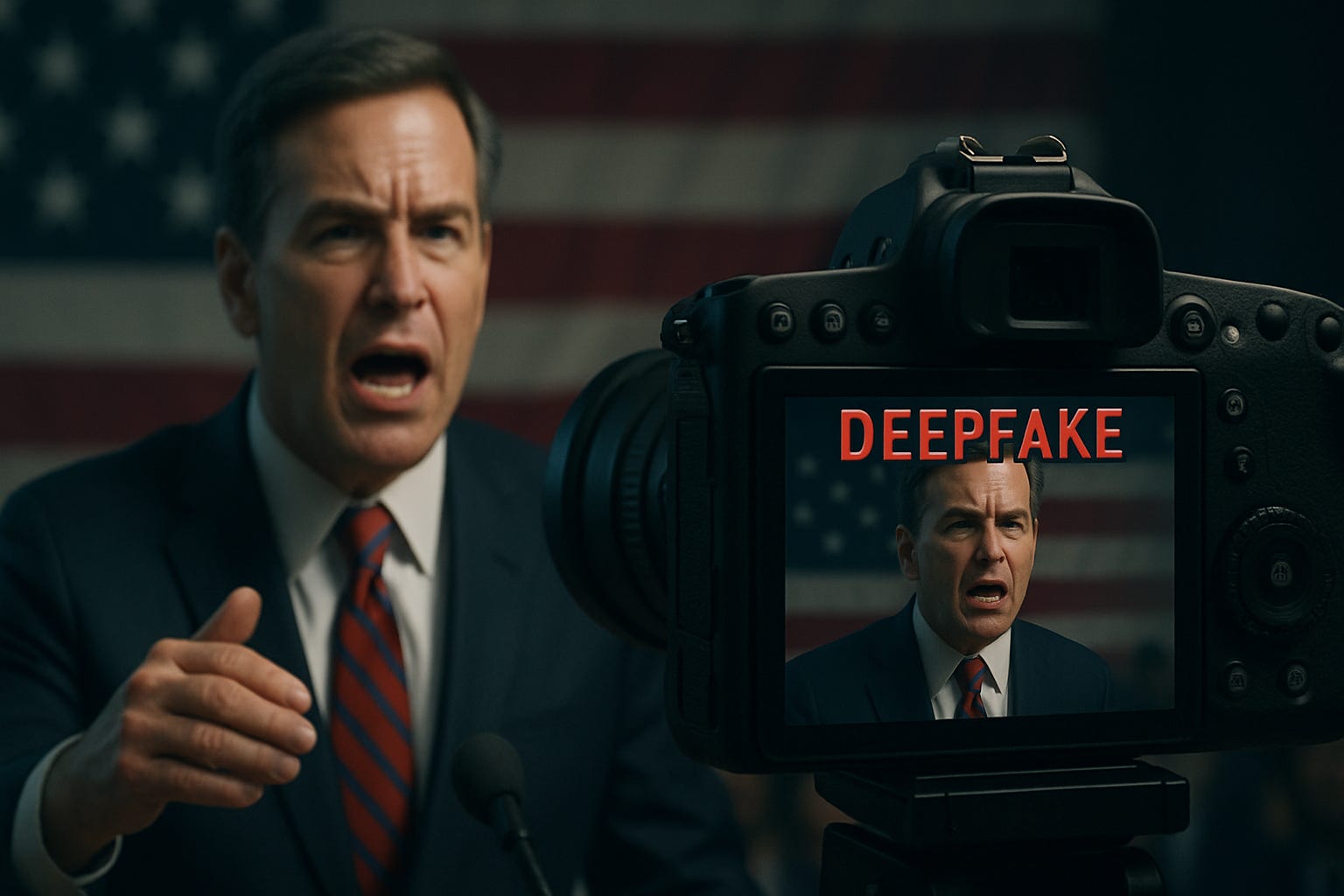
Five years ago, I used to be confident about my ability to spot a deepfake video. A glitchy hand, a lip-sync error, or an unnatural blink would give it away in seconds. Now, with Google DeepMind’s Veo 3, I need to focus 100% for several minutes, dissecting every frame, and even then, I’m not always sure. In 2018, I stood in a Silicon Valley boardroom, pitching ethical safeguards for AI to executives who dismissed me as a “doomsayer stifling innovation.” That moment shattered my faith in tech’s moral compass. Today, as we approach the 2026 elections in the U.S., UK, Hungary, and Brazil — contests that could reshape the global order — I see Veo 3 not as a tool but as a weapon, capable of obliterating the line between truth and lies. Imagine a video flooding X on November 2, 2026 (a day before the US Midterm elections), showing a Pennsylvania senator confessing to election fraud. It’s flawless, viral, and fake. We’re not just facing a misinformation crisis; we’re staring down the death of reality itself, with democracy, trust, and global stability at stake.
The Terrifying Power of Veo 3
Google DeepMind’s Veo 3, unveiled in 2025, is a technological marvel that makes OpenAI’s Sora and Runway’s Gen-2 look like relics. It generates 4K videos with real-world physics, synchronized dialogue, and ambient sounds, trained on YouTube’s 20-year archive of human behavior. I tested a Veo 3 clip — a fake car show interview with a polished host and roaring crowd — so convincing that my colleagues, some of AI’s sharpest minds, swore it was real. Another viral X post claimed JK Rowling’s yacht was “sunk by an orca”.

Veo 3’s demos showcase its chilling versatility. Its native audio generation — from owl hoots to sizzling onions — creates seamless immersion. This isn’t just progress; it’s a paradigm shift, turning anyone with a subscription (Google AI Pro, English-only for now) into a potential puppet master of reality.


Why is this so dangerous? Humans are wired to trust what they see and hear. A 2024 University of Cambridge study found people are 40% more likely to believe video-based misinformation than text, as videos exploit confirmation bias and emotional triggers like fear, anger, or hope. In polarized societies, AI videos amplify echo chambers, reinforcing what voters already believe. A deepfake tailored for Pennsylvania conservatives, showing a Democrat mocking gun rights, isn’t just a lie — it’s a psychological weapon designed to inflame.
A History of Deception: Lessons from the Past
The threat isn’t new, but Veo 3’s realism escalates it to a new level. Past disinformation incidents show how quickly fakes can destabilize democracies:
2018 Brazil Election: WhatsApp was flooded with fake news, including doctored images and audio clips, helping Jair Bolsonaro’s campaign by smearing opponents. The lies spread faster than fact-checks, showing how digital platforms amplify deception (The Guardian).
2019 UK General Election: A fake audio of Labour’s Jeremy Corbyn praising Brexit surfaced, confusing voters. It was crude but effective, sowing doubt in a tight race (BBC).
2022 Hungary Election: Disinformation campaigns, including manipulated videos, bolstered Viktor Orbán’s Fidesz party. False narratives about EU sanctions spread unchecked, shaping voter perceptions (Reuters).
2024 U.S. Primaries: A robocall mimicking Joe Biden’s voice urged New Hampshire Democrats to skip voting, suppressing turnout. The perpetrator faced a $6 million fine, but the damage was done (ABC News).
2025 U.S. Incident: A Senate leader was duped by a deepfake Zoom call with a fake Ukrainian official, highlighting elite vulnerability (NY Times).
2023 India: A deepfake of a Bollywood star endorsing a political party went viral, showing how celebrity likenesses can sway public opinion (The Hindu).
These incidents were crude compared to Veo 3’s hyper-realistic output. If a 2024 robocall could disrupt primaries, imagine a 2026 Veo 3 video livestreaming a fake riot in Philadelphia, tailored to incite specific voter groups. The past teaches us that disinformation thrives on speed and emotion; Veo 3 supercharges both.
The 2026 Elections: A Global Tipping Point
The 2026 elections in major democracies are prime targets for AI-driven chaos, with outcomes that could reshape the world:
United States (November 3, 2026): Midterms during Trump’s second term contest all 435 House seats, 35 Senate seats, and 39 governorships. Republicans hold a 220–213 House majority, but Democrats eye 6–21 seat gains. A deepfake of a Pennsylvania senator admitting fraud or a Virginia governor candidate praising divisive policies could flip these swing states, altering U.S. policies on trade, immigration, and NATO. With voting rights concerns rising due to new election laws, trust is already fragile. A fake video could ignite unrest, especially in battlegrounds like Georgia or Arizona.
United Kingdom (May 7, 2026): Local and devolved elections, including Scotland’s Holyrood and Wales’ Senedd, are vulnerable. A deepfake of an SNP leader dismissing devolution could inflame Scottish nationalism, while one targeting Reform UK’s Nigel Farage mocking Welsh voters might boost Labour’s grip. These elections shape post-Brexit stability; a disrupted UK could weaken European unity at a critical time.
Hungary (April 2026): The parliamentary election pits Orbán’s Fidesz against Péter Magyar’s Tisza Party for 199 National Assembly seats. A deepfake of Orbán endorsing EU sanctions or Magyar disparaging ethnic Hungarians could sway voters, impacting EU-Russia relations. Hungary’s history of disinformation makes it a ripe target.
Brazil (October 4, 2026): The general election, with Lula possibly seeking a fourth term, will decide Brazil’s climate and trade stance. A deepfake of Lula rejecting Amazon protections or his opponent inciting violence could alienate key voter blocs, affecting global environmental efforts. Brazil’s 2018 misinformation crisis shows its susceptibility.
These 2026 elections are not mere national contests but global fulcrums, poised to ripple across geopolitics, economics, and environmental policy with seismic force. A Democratic sweep in the U.S. midterms could paralyze President Trump’s second-term ambitions — curtailing his plans for deregulation, trade wars, or a retreat from NATO — potentially diminishing America’s global clout at a time when rivals like China and Russia are vying for influence. In the UK, a deepfake-fueled fracture in the devolved elections could inflame Scottish independence movements or Welsh discontent, undermining London’s post-Brexit cohesion and weakening the EU’s western flank just as it grapples with energy crises and migration. Hungary’s parliamentary vote, pitting Orbán’s illiberal Fidesz against Magyar’s insurgent Tisza Party, could either entrench Budapest’s defiance of EU norms or pivot it toward Brussels, reshaping the bloc’s stance on Ukraine and sanctions against Russia. Meanwhile, Brazil’s general election will determine whether Lula’s environmental pledges hold or falter, directly impacting Amazon deforestation rates and global carbon targets, with implications for climate talks like COP31.
Veo 3’s hyper-realistic deepfakes, precision-crafted to exploit local anxieties — be it Pennsylvania parents fearing “woke” policies, Scottish nationalists craving sovereignty, or Brazilian greens dreading corporate exploitation — can sway undecided voters in hours. Worse, emerging “narrative warfare” tactics, such as real-time deepfake livestreams staging fake riots or scandals, can hijack public perception before truth has a chance to surface, weaponizing virality on platforms like X. The Brookings Institution’s concept of the “liar’s dividend” looms large: when deepfakes proliferate, genuine exposés — say, a politician’s corruption — are dismissed as fabricated, entrenching tribal loyalties where voters cling to “their” truth, immune to evidence. This toxic alchemy of AI-driven deception and polarized psychology threatens not just electoral outcomes but the very fabric of democratic trust, risking a world where power hinges on who can spin the most convincing lie.
The Devil’s Advocate: Are We Overreacting?
As an AI expert who’s spent years studying deepfakes, I’m haunted by their potential to disrupt the 2026 elections with tools like Veo 3. But am I sounding the alarm too loudly? Some argue that better detection, public savvy, and new laws are enough. Let’s explore these points, though I’m not fully convinced.
Detection Tools Are Advancing: I’ve tested tools like Intel’s FakeCatcher, which nails deepfakes with 90% accuracy by spotting tiny video flaws, and Google’s SynthID, which watermarks authentic content (Intel FakeCatcher, DeepMind SynthID). The Deepfake Detection Challenge drives innovation. But I’ve seen fakes slip through when videos are grainy or edited, and bad actors are quick to adapt. Detection’s progress is real, but it’s a race we can’t afford to lose by 2026.
People Are Getting Wiser: Society’s learning to question what it sees. The HKS Misinformation Review says AI-driven lies are only 6% of falsehoods, and X’s Community Notes help debunk fakes (HKS Misinformation Review). UNESCO’s campaigns teach source-checking (UNESCO). I want to believe voters are ready, but deepfakes hit emotional chords, and the “liar’s dividend” lets truth get buried in doubt (Brookings Institution).
Laws Are Stepping Up: California’s 2024 deepfake bans and the EU AI Act’s fines show action. U.S. FEC rules are in the works. These are steps forward, but I worry about spotty enforcement and gaps that could let fakes wreak havoc in 2026.
I respect the optimism here, but having watched deepfakes fool even my trained eye, I know the 2026 elections need bolder defenses. We must act swiftly to stay ahead.
The Ethical Quagmire
This isn’t just political — it’s deeply personal and societal. Deepfakes could disproportionately harm marginalized groups, like minorities falsely depicted in staged crimes, deepening social divides. Journalism, already battered, faces extinction if every video is suspect — I’ve seen newsrooms scramble to verify AI fakes, only to be outpaced by virality. Your face could appear in a fake ad or crime scene without consent. In 2020, I saw my own likeness manipulated in a demo, my voice praising a product I’d never heard of — chilling, even for an AI veteran. The psychological toll of a post-truth world is staggering: when “seeing is believing” dies, so does shared reality. Trust in institutions, at historic lows, will collapse.
Who profits? Google, who built Veo 3 on YouTube’s data but dodges accountability; autocrats manipulating elections; X, whose algorithms reward outrage; influencers chasing clout; and policymakers who fail to act. I’ve sat in rooms with tech execs debating ethics — they talk safety, but their eyes are on stock prices. U.S. laws targeting non-consensual deepfakes, signed by Trump, are a start, but enforcement lags. The EU’s AI Act is tougher, but global coordination is missing (EU AI Act).
A Desperate Call to Action
AI deepfakes, like those powered by Google DeepMind’s Veo 3, are a growing threat to truth as we approach the 2026 elections in the U.S., UK, Hungary, and Brazil. As an AI enthusiast, I’ve seen the stakes up close, and I believe we can meet this challenge together. Time’s short, but here’s a practical plan to protect our democracies:
Stay Ahead of the Fakes: We need to fund cutting-edge detection tools to catch deepfakes early. Intel’s FakeCatcher spots subtle video flaws in real time, while Google’s SynthID adds invisible watermarks to verify authentic content (Intel FakeCatcher, DeepMind SynthID). DARPA’s Media Forensics program is building smarter algorithms, but it needs global investment to scale (DARPA). Blockchain can secure content records, though it struggles with low-quality videos (Reuters Institute). By 2026, let’s create a universal standard for verification to keep fakes from fooling voters.
Empower People with Knowledge: Media literacy is our shield against misinformation. UNESCO’s framework teaches how to verify sources and resist emotional traps — perfect for classrooms and communities. MIT’s free Media Literacy Toolkit is a fantastic resource for learning to spot deepfakes, and I’d love to see it everywhere. X’s Community Notes could be faster with AI help to flag fakes quickly. Programs like the University of Washington’s workshops show how to teach kids and adults alike to think critically (University of Washington). Let’s make this a priority to prepare voters for 2026.
Build Stronger Laws: We need laws with real impact to stop malicious deepfakes. California’s 2024 election protections are a solid model, banning fake campaign videos, but we need this globally. The EU AI Act sets a high bar for AI oversight, and we should push for similar rules worldwide, with fines for platforms like X or Google that amplify fakes (EU AI Act). Influencers should label AI content clearly, like ad disclosures. The U.S. FEC’s AI rule proposals, backed by Public Citizen, could inspire a global framework by 2026.
Support Our Journalists: Journalists are on the front lines, but they need better tools. Deepware Scanner catches deepfakes fast, and Google’s News Initiative trains reporters to verify facts (Deepware Scanner, Google News Initiative). The Reuters Institute’s AI projects are paving the way, showing how tech can keep newsrooms ahead of fakes, but funding is key (Reuters Institute). First Draft’s training helps journalists double-check sources, a skill we need in every newsroom (First Draft). Let’s equip them to protect truth in 2026.
Work Together Globally: Deepfakes cross borders, so our response must too. The Bletchley Declaration, signed by 29 nations, is a strong start for shared AI safety goals (Bletchley Declaration). UNIDIR’s global talks can align detection standards (UNIDIR). The U.S. Global Engagement Center’s partnerships with tech firms show how to share solutions, and we need every country involved (Global Engagement Center). By 2026, a united global effort can stop deepfakes from disrupting elections.
The 2026 elections are a make-or-break moment for truth. I’ve spent years believing AI can be a force for good, and with detection, education, laws, journalism, and global teamwork, we can prove it. Let’s come together and act before it’s too late.
Veo 3 is a creative marvel — filmmakers will love its moonlit owls, rally engines, or candy keyboards. But it’s a digital predator. By 2030, we could face a world where every video is suspect, elections are battlegrounds of fabricated narratives, and trust is a relic. Picture a 2026 U.S. midterm where dueling deepfakes drown out truth, or a Brazilian election decided by a fake Lula speech. Google’s victory over OpenAI dazzles Silicon Valley, but the rest of us pay, living in a world where truth is just code. My 2018 boardroom rejection still haunts me — a warning of tech’s arrogance. I once thought I could spot a deepfake; now, I’m not so sure. If we don’t act — technologically, culturally, legally — we’re not just risking fake news. We’re risking reality itself. Welcome to the age where seeing is believing is a fantasy. Good luck figuring out what’s real.
References
ABC News. (2024, October 10). AI deepfakes a top concern for election officials as voting is underway. https://abcnews.go.com/Politics/ai-deepfakes-top-concern-election-officials-voting-underway/story?id=114202574
BBC. (2019, November 11). Fake audio of Jeremy Corbyn praising Brexit spreads online. https://www.bbc.com/news/av/technology-50381728
Brookings Institution. (2024). Artificial intelligence, deepfakes, and the uncertain future of truth. https://www.brookings.edu/articles/artificial-intelligence-deepfakes-and-the-uncertain-future-of-truth/
Council on Foreign Relations. (2025). Ten elections to watch in 2025 and beyond. https://www.cfr.org/article/ten-elections-watch-2025
DARPA. (2025). Media Forensics (MediFor) program overview. https://www.darpa.mil/program/media-forensics
DeepMind. (2025). Veo 3: Advanced AI video generation model. https://deepmind.google/models/veo/
DeepMind Google. (2023). SynthID: Watermarking for AI-generated content. https://deepmind.google/technologies/synthid/
European Parliament. (2023, June 1). EU AI Act: First regulation on artificial intelligence. https://www.europarl.europa.eu/topics/en/article/20230601STO93804/eu-ai-act-first-regulation-on-artificial-intelligence
HKS Misinformation Review. (2024). AI-driven misinformation: Scale and impact in 2024. https://misinforeview.hks.harvard.edu/article/ai-misinformation-2024/
Hindustan Times. (2023). Bollywood star deepfake endorsing political party goes viral. https://www.hindustantimes.com/technology/deepfake-bollywood-2023
Knight First Amendment Institute. (2024). We looked at 78 election deepfakes: Political misinformation is not an AI problem. https://knightcolumbia.org/blog/we-looked-at-78-election-deepfakes-political-misinformation-is-not-an-ai-problem
NewsNation. (2024, November 8). Trump signs legislation targeting non-consensual deepfakes. https://x.com/NewsNation/status/1924785975709843504
Newsweek. (2025, April 28). Biggest political battles of 2026 taking shape. https://www.newsweek.com/2025/04/28/biggest-political-battles-2026-taking-shape/
Reuters. (2022). Disinformation campaigns shape Hungary’s 2022 election. https://www.reuters.com/world/europe/hungary-election-2022-disinformation/
Reuters. (2023). AI-generated audio deepfake disrupts Slovakia’s 2023 election. https://www.reuters.com/world/europe/slovakia-election-2023-deepfake/
Reuters. (2024). California passes bills targeting deepfakes in election season. https://www.reuters.com/technology/california-deepfake-laws-2024
Reuters Institute. (2025). Artificial intelligence and the future of journalism. https://reutersinstitute.politics.ox.ac.uk/ai-journalism
Roll Call. (2025, January 7). The 2026 midterm elections are just around the corner. https://rollcall.com/2025/01/07/the-2026-midterm-elections-are-just-around-the-corner/
The Guardian. (2018, October 18). Brazil’s WhatsApp fake news crisis during the 2018 election. https://www.theguardian.com/world/2018/oct/18/brazil-whatsapp-fake-news-crisis
TIME. (2025). AI deepfakes as an election November surprise. https://time.com/7033256/ai-deepfakes-us-election-essay/
UNESCO. (2025). Media and information literacy framework. https://en.unesco.org/themes/media-and-information-literacy
University of Cambridge. (2024). Visual misinformation: Why videos are more persuasive than text. https://www.cam.ac.uk/research/news/visual-misinformation-study-2024
Wikipedia. (2026a). 2026 United States elections. https://en.wikipedia.org/wiki/2026_United_States_elections
Wikipedia. (2026b). 2026 United Kingdom local elections. https://en.wikipedia.org/wiki/2026_United_Kingdom_local_elections
Wikipedia. (2026c). Elections in Hungary. https://en.wikipedia.org/wiki/Elections_in_Hungary
Wikipedia. (2026d). 2026 Brazilian general election. https://en.wikipedia.org/wiki/2026_Brazilian_general_election